
The submit Middle East’s top 10 airports ranked as Gulf carriers expand long-haul networks appeared first on TD (Travel Daily Media) Travel Daily Media.

Positioned between Europe, Asia, and Africa, Middle East airports have developed from regional gateways into among the world’s most influential long-haul hubs.
Capitalising on trendy hubs, that are well-located inside an 8-hour flight from 80% of the world’s inhabitants, Middle East carriers will additional join folks and economies in Europe, Africa and Asia. Boeing’s 2025 Commercial Market Outlook (CMO) tasks the area’s airways will want practically 1,400 widebody passenger jets by 2044 – the most important share of recent deliveries of all world areas – as they expand world connectivity with newer, extra fuel-efficient fleets.
The aviation sector within the Middle East is positioned for unprecedented development over the subsequent 20 years, with whole aviation-related jobs projected to extend by 134%, the best development fee of any area globally, in keeping with a complete white paper launched by Aviation Business ME and GE Aerospace.
The Middle East is the sixth largest area on this planet based mostly on obtainable capability, with 270 million one-way seats in 2024 inserting the area forward of Eastern Europe and behind South Asia.
For the journey commerce, these airports decide route economics, passenger flows, alliance methods, and vacation spot development.
This rating displays not simply passenger numbers, however hub affect, airline dominance, infrastructure maturity, and strategic relevance to worldwide journey and tourism.
- Dubai International Airport (DXB), United Arab Emirates
Dubai International Airport stays the Middle East’s defining aviation hub. Despite capability constraints, DXB continues to dominate worldwide passenger site visitors, underpinned by Emirates’ huge long-haul community and Dubai’s enduring attraction as a worldwide vacation spot.
For the journey commerce, DXB’s significance is structural moderately than cyclical: it anchors intercontinental itineraries, sustains high-frequency connectivity, and units benchmarks for transit effectivity and business efficiency.
- Hamad International Airport (DOH), Qatar
Hamad International Airport has constructed its popularity on precision moderately than scale alone. As the hub of Qatar Airways, DOH has develop into a most well-liked switch level for premium and long-haul travellers, strengthened by constant world awards and operational reliability.
Its affect lies in yield high quality, alliance relevance, and repair consistency — attributes that proceed to resonate strongly with airways and commerce companions alike.
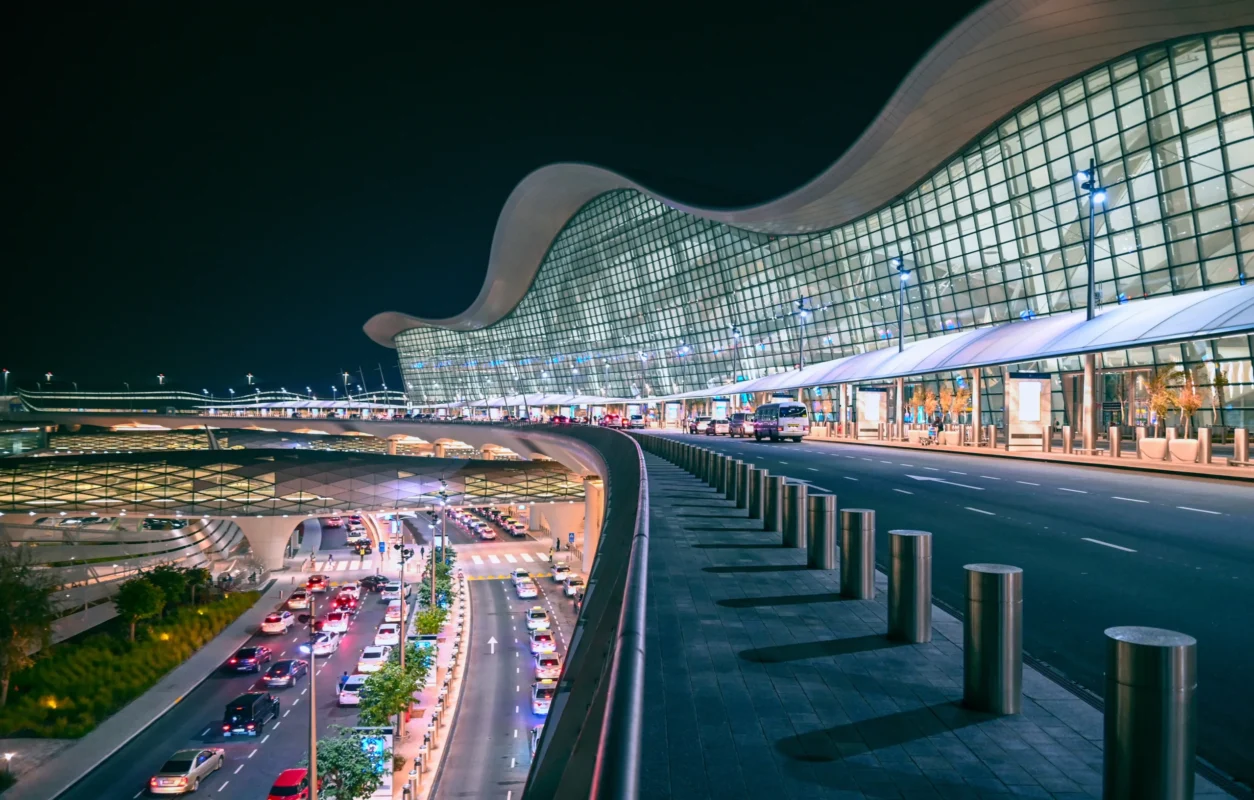
- Abu Dhabi International Airport (AUH), United Arab Emirates
The opening of Terminal A marked a turning level for Abu Dhabi International Airport. Long positioned behind its Gulf neighbours, AUH is now structurally outfitted to compete at scale, supported by Etihad Airways’ recalibrated community technique.
For the journey commerce, Abu Dhabi’s renewed momentum alerts a market transitioning from ambition to execution.
- King Khalid International Airport (RUH), Saudi Arabia
Riyadh has emerged as the centre of gravity in Saudi Arabia’s aviation enlargement. King Khalid International Airport sits on the coronary heart of Vision 2030, serving a fast-growing outbound market whereas positioning itself as a future intercontinental hub.
Its rising relevance is much less about present volumes and extra about trajectory — an element commerce planners can not ignore.
- King Abdulaziz International Airport (JED), Saudi Arabia
Jeddah’s function is each historic and strategic. As the first gateway for Hajj and Umrah, King Abdulaziz International Airport handles among the world’s most advanced seasonal site visitors flows. Beyond spiritual journey, it’s more and more tied to Saudi Arabia’s Red Sea tourism ambitions.
Few airports globally mix such operational depth with long-term vacation spot significance.
- Cairo International Airport (CAI), Egypt
Cairo International Airport stays one of the necessary aviation hubs linking the Middle East with Africa. High passenger volumes, robust VFR demand, and EgyptAir’s community breadth proceed to anchor its place regardless of infrastructure pressures.
For the journey commerce, Cairo is a volume-driven market with enduring regional relevance.
- Kuwait International Airport (KWI), Kuwait
Kuwait International Airport has quietly strengthened its function by phased enlargement and improved passenger services. While not a mega-hub, it serves a resilient outbound market and stays strategically necessary for regional and South Asian connectivity.
Its worth lies in consistency moderately than scale.
- Muscat International Airport (MCT), Oman
Muscat International Airport displays a special mannequin of regional aviation — measured development, robust nationwide branding, and selective route growth. As Oman Air’s hub, it helps a tourism technique targeted on tradition, nature, and premium leisure moderately than mass transit.
For the commerce, Muscat is more and more related to curated, high-value itineraries.
- Bahrain International Airport (BAH), Bahrain
Bahrain International Airport punches above its weight operationally. Its trendy terminal and environment friendly processes help a gentle mixture of enterprise, regional, and connecting site visitors, reinforcing Bahrain’s function as a monetary and business centre.
- Prince Mohammad bin Abdulaziz International Airport (MED), Saudi Arabia
Serving Medina, this airport’s significance is outlined by objective moderately than scale. It is a important node in world spiritual journey, dealing with intense seasonal demand with growing effectivity as Saudi Arabia invests additional in pilgrimage infrastructure.
SAFFA Fund has dedicated as much as $30 million in a sustainable aviation fuel project being developed by SAF One Energy Management, marking a big step towards establishing SAF manufacturing capability within the Middle East.
Together, these airports illustrate the Middle East’s aviation mannequin: hub focus, airline-driven development, and sustained infrastructure funding. For the worldwide journey commerce, their affect extends effectively past geography — shaping fares, routings, capability selections, and vacation spot growth worldwide.
As fleet enlargement, tourism diversification, and coverage liberalisation proceed, the area’s airports are set to stay among the many most consequential in world aviation.
The launch of Riyadh Air is without doubt one of the most fascinating disruptions within the Middle East market, alongside the deliberate development of rival Saudi airline Saudia. In the subsequent article we are going to discover how competitors is fuelling development for ME airways!
The submit Middle East’s top 10 airports ranked as Gulf carriers expand long-haul networks appeared first on Travel Daily Media.
Source link
